The Wells We Overlook
- adiromem
- Aug 27, 2025
- 3 min read
Rosh Hashanah sermon- Rabbi Adi Romem
Shanah Tovah, dear friends,
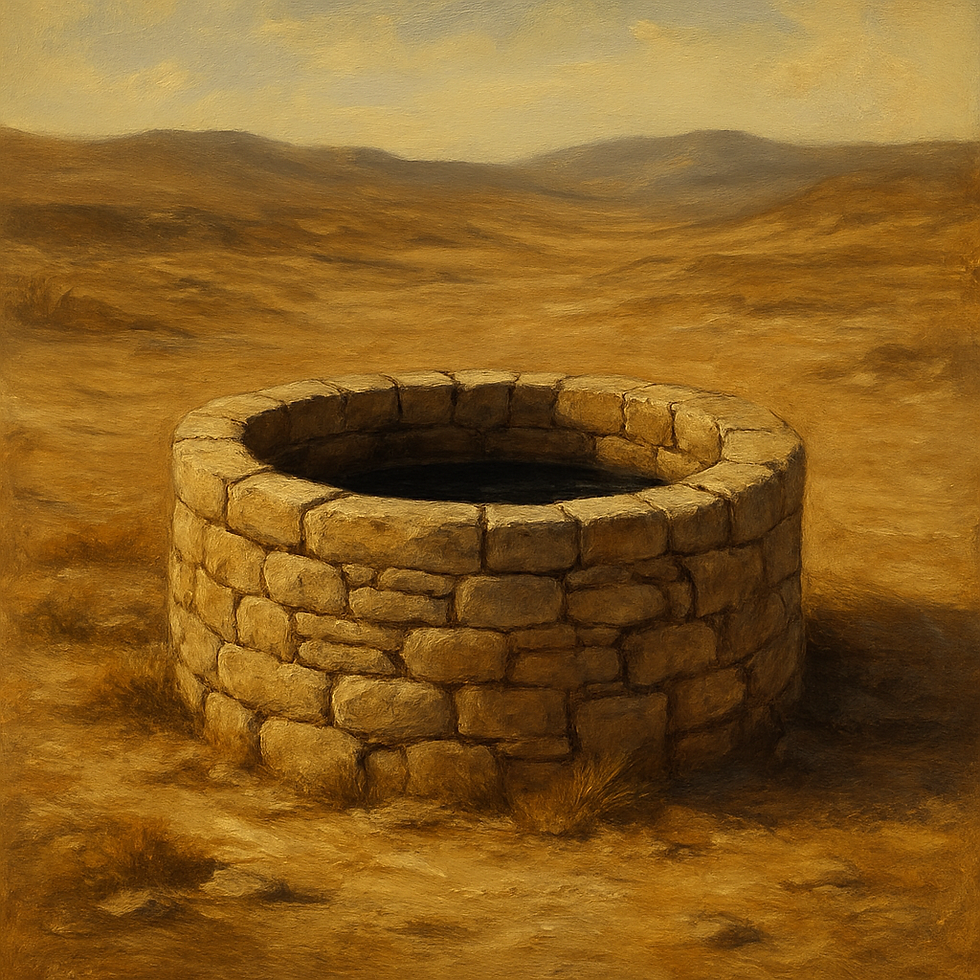
On Rosh Hashanah, we return again to one of the most heart-wrenching stories in our Torah: Hagar wandering the wilderness with her son. The desert sun is merciless, her water is gone, and despair overwhelms her. She places the boy under a bush, unable to watch him die.
And then, the Torah says something extraordinary: וַיִּפְקַ֤ח אֱלֹהִים֙ אֶת־עֵינֶ֔יהָ וַתֵּ֖רֶא בְּאֵ֣ר מָ֑יִם“Vayifkach Elohim et eineha vateireh be’er mayim” -“And God opened her eyes, and she saw a well of water. ”Notice what the text does not say. It does not say God created a new well. It does not say God gave her new water. The miracle was not the sudden appearance of salvation, but rather the opening of her eyes to what had been there all along.
Hagar’s well was always right in front of her. She simply couldn’t see it, blinded by fear, by exhaustion, by tears.
And isn’t that us, so often? We rush, we worry, we doomscroll. Our anxieties, our griefs, our endless to-do lists blur our vision. And all the while, the blessings are sitting right before us waiting for us to open our eyes.
As Meg Cabot once wrote: “Sometimes what you want is right in front of you. All you have to do is open your eyes and see it.”

Choosing to See the Good
The Israeli poet Leah Goldberg put it this way:“ There are in the world so many beautiful things, flowers and animals, people and landscapes. And whoever has open eyes sees, every day, at least a hundred wonderful things.”
But sometimes, our eyes are clouded. Not because the world lacks beauty, but because sorrow has blurred our vision. As Barak Feldman reminds us:
“Perhaps our eyes
must sometimes be rinsed with tears,
so that the world may appear
sharper, and a little less entangled.”
What a profound paradox: tears, which we think obscure, may actually cleanse. The very moments of grief can help us see life more clearly, with fewer illusions, with greater tenderness.
And then, Nathan Zach lifts us to the response that follows true seeing: “I always want eyes to see the beauty of the world…to praise the one who made it beautiful.”
Hidden Wells of the Past Year
Rosh Hashanah is our yearly invitation to such vision. Yes, it is a time of cheshbon hanefesh - accounting of the soul. We examine what we did wrong, where we fell short. But equally, it is a time to see the good. To say thank you. To notice the hidden wells.
And we have seen them, even in this painful year.
We saw hidden wells of resilience.
We saw hidden wells of arevut hadadit- mutual responsibility.
We saw hidden wells of kindness.
· We saw hidden wells of hope in congregations gathering not only to pray, but to serve, to heal, and to stand for justice together.
These wells were not new. They were always there. But it took crisis and open eyes to reveal them.
Believing in Order to See
We often say, “Seeing is believing.” But perhaps the opposite is true: we must believe in order to see. To believe that beauty exists even when the desert looks endless. To believe in the wells of hope, of love, of community, even when fear blinds us.
Faith in God, in humanity, in ourselves is what allows us to see the water that was there all along.
A Call for the New Year
So as we step into this new year, let us ask ourselves:
Where are the wells I have overlooked?
Who are the people in front of me whose kindness I have taken for granted?
What opportunities for growth and joy have I ignored, because I was too consumed by fear?
This Rosh Hashanah, may we open our eyes. Open them to gratitude. Open them to resilience. Open them to the goodness that is already in our lives, and the goodness we can create together.
And then, having seen the wells, may we do what Hagar did: fill the skin with water, and give life to another. Because the miracle is not only in seeing. The miracle is in acting.
Blessing
May this year be one of open eyes. May we see the beauty, the love, the courage around us. May we drink deeply from the wells of hope. And may we become, each one of us, a wellspring for others.
Shanah Tovah U’metukah - a good and sweet year.


Comments